

A trusted alternative to LASIK for clearer vision in Sydney

ICL surgery places a personalised lens inside the eye, which may reduce the need for glasses or contacts when laser vision correction isn’t suitable

A trusted alternative to LASIK for clearer vision in Sydney

ICL surgery places a personalised lens inside the eye, which may reduce the need for glasses or contacts when laser vision correction isn’t suitable

With ICL surgery, clearer vision may be possible without laser reshaping

Explore how this lens-based option could support your vision when LASIK isn’t recommended

  • ICL surgery may be recommended for people who want greater vision freedom but are not suitable for LASIK or PRK.
  • It can be considered for those with high prescriptions, thinner corneas, or dry eye that makes laser treatment less ideal.
  • ICL lenses may treat myopia up to -20D, hyperopia up to +10D, and astigmatism up to 6D. In some cases, ICLs are combined with laser vision correction in a procedure called bioptics.
  • They may also be suitable for individuals with certain corneal conditions such as keratoconus.
  • A full assessment ensures that ICLs are appropriate for your unique eyes.
  • ICL surgery involves placing a thin, flexible lens just behind the iris and in front of your natural lens.
  • Numbing drops are used for comfort, and the procedure is typically completed in a short timeframe.
  • The implanted lens works with the eye’s natural focusing system to help light enter correctly for clearer vision.
  • Because no corneal tissue is removed, the structure of the eye remains largely unchanged.
  • The lens remains in the eye permanently but can be removed or replaced in the future if visual needs change.
  • Healing usually progresses quickly with follow-up care to monitor results.
  • ICL surgery may provide excellent visual quality for people with high prescriptions or thin corneas.
  • It does not weaken the structure of the cornea, and the lens can be removed or exchanged later if needed, offering long-term flexibility.
  • Many people prefer ICLs due to comfort if they struggle with contact lenses.
  • However, like all procedures, it has limitations. It requires surgery inside the eye, which carries potential risks, and some people may still need glasses for certain tasks.
  • Suitability depends on your prescription, eye health, and lifestyle goals, all discussed during consultation to support a well-informed decision.
  • ICL surgery has an excellent safety profile but still involves risks.
  • Temporary symptoms may include glare, halos, and light sensitivity during healing.
  • Rare complications include infection, cataract development, or changes in eye pressure that may require additional care.
  • Regular check-ups are important to protect the long-term health of internal eye structures. Suitability tests are designed to reduce the likelihood of complications.
  • Your surgeon will explain risks clearly so you can feel fully informed before deciding whether ICL surgery may be right for your eyes.
  • Your ICL journey begins with a thorough vision and eye-health assessment to confirm suitability and choose the correct lens type and size.
  • On the day of the procedure, numbing drops are used to keep your eyes comfortable.
  • A tiny incision is made, and the thin flexible lens is gently inserted and positioned behind the iris and in front of the natural lens.
  • The incision is usually self-sealing and does not require stitches.
  • You will rest briefly before going home the same day.
  • Follow-up visits are scheduled to monitor recovery, eye pressure and visual improvement as the eye adjusts to the new lens.
  • Many people notice improved vision once the eye adjusts after ICL surgery.
  • Visual clarity may continue to stabilise over the following days and weeks.
  • Some individuals may still need glasses for certain tasks depending on their prescription and age-related vision changes.
  • One benefit of ICLs is that the lens remains adaptable, allowing future updates if vision needs evolve.
  • Long-term follow-up helps ensure healthy eyes and optimal results.
  • Your surgeon will provide personalised expectations based on your goals and eye characteristics.

Find out if vision correction could suit your eyes

Book an appointment to learn whether refractive surgery may be an option for you

Find out if vision correction could suit your eyes

Book an appointment to learn whether refractive surgery may be an option for you

GAIN VISUAL FREEDOM IN 3 EASY STEPS

Eye treatment options can be confusing, we’ve made the path to healthier vision easy to follow

STEP 1: GET IN TOUCH

Every eye is different. The first step is to find out which treatment could help you see more clearly and protect your long-term vision. Call our caring team or use our online calendar to book an appointment.
STEP 2: WE’LL MEET

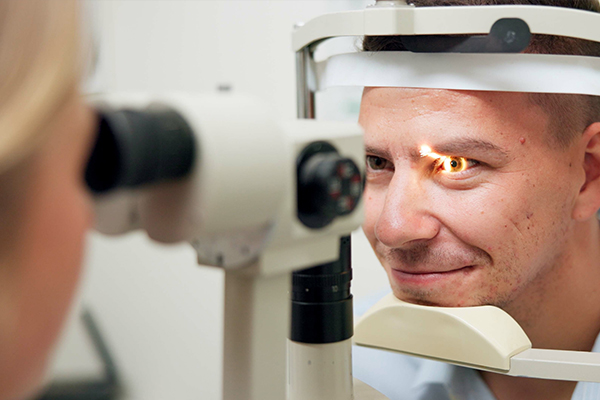
During your appointment, we’ll examine your eyes and explain which treatment options may suit your condition and lifestyle. You’ll receive expert advice and a clear, personalised plan.

STEP 3: ENJOY FREEDOM

After treatment, many people feel relief knowing their eyes are healthier and their sight is clearer. With proper care, you can look forward to years of confident, comfortable vision.

Find out if laser eye surgery could suit your eyes

Take our quick 2-minute test to learn which vision correction options may fit your eyes, lifestyle, and goals

Find out if laser eye surgery could suit your eyes

Take our quick 2-minute test to learn which vision correction options may fit your eyes, lifestyle, and goals

Academic resources on laser eye surgery

Learn more from authoritative clinical publications. These links will take you off our website

This article explains how laser eye surgery reshapes the cornea to correct vision issues like short-sightedness, long-sightedness and astigmatism. It covers who’s suitable, what the procedure involves, how recovery works, and possible risks.

Read more

This article outlines how laser eye surgery uses a laser to reshape the cornea and correct myopia, hypermetropia and astigmatism. It covers suitability, risks, recovery and long-term outlook.

Read more

Refractive surgery offers a range of procedures to reduce reliance on glasses or contact lenses by reshaping the cornea. From LASIK to SMILE, these treatments address conditions like nearsightedness, farsightedness, and astigmatism.

Read more

Hi, I’m Dr Daya Sharma

I’m a cataract, corneal and refractive surgeon with subspecialty training from Moorfields Eye Hospital in London and Sydney Eye Hospital. I perform laser vision correction procedures, refractive lens surgery, and advanced cataract surgery using the latest diagnostic and surgical technology. My work is focused on helping people reduce their dependence on glasses and improve their quality of vision at all distances. I’m actively involved in research, publication and surgical education, and I take pride in offering honest, thorough guidance to every patient. My approach is personal, careful and always tailored to individual needs and lifestyles.

Hi, I’m Dr Shanel Sharma

I’m an ophthalmologist with subspecialty training in paediatric eye conditions, strabismus, medical retina and general ophthalmology from leading hospitals in Sydney and London, including Moorfields Eye Hospital. I hold a Fellowship with RANZCO and have published widely in peer-reviewed journals. My focus is providing careful, individualised care using evidence-based treatments. I’m accredited to treat a range of conditions and perform procedures including intravitreal injections, strabismus surgery and botulinum toxin treatments. I always aim to make the process clear, calm and supportive.