


Specialist care for flashes and floaters in Sydney

Detailed retinal assessment and tailored treatment may help you understand the cause of visual disturbances and protect your vision

Specialist care for flashes and floaters in Sydney

Detailed retinal assessment and tailored treatment may help you understand the cause of visual disturbances and protect your vision

With our retinal care, you may find clarity and reassurance

Quickly discover how modern evaluation and treatments for flashes and floaters may support healthy vision
  • Flashes and floaters occur when the eye’s vitreous gel shifts and tugs on the retina or when small clumps cast shadows on the retina.
  • This is called a posterior vitreous detachment (PVD). Most PVDs are benign, but sometimes the pull can create a small retinal tear. If a tear isn’t treated, fluid may track under the retina and cause a retinal detachment.
  • Floaters appear as specks, threads or cobweb-like shapes drifting in vision, most obvious against bright backgrounds.
  • Flashes often look like brief bursts or streaks of light and while they can be benign, they may also signal something more serious such as a retinal tear or detachment.
  • Because every case varies, it’s important to have a specialist examine sudden changes in flashes or floaters to ensure no urgent retinal damage is present.
  • In many cases, flashes and floaters do not require treatment beyond observation, as the brain adapts and symptoms become less bothersome.
  • When symptoms are persistent or there is underlying retinal damage, treatment may include laser vitreolysis (laser disruption of floaters) or pars-plana vitrectomy (surgical removal of the vitreous gel).
  • If flashes or floaters are linked to a retinal tear or detachment, prompt laser or surgical repair is critical to preserve vision.
  • Your ophthalmologist will assess the risk and explain the most suitable approach given your eye’s condition.
  • After a full dilated retinal examination and imaging, if the cause is benign and non-progressive, no treatment may be needed.
  • If a retinal tear or detachment is detected, laser photocoagulation or surgery is used to repair the retina and prevent further vision loss.
  • For troublesome floaters, laser vitreolysis uses low-energy laser pulses to break up floater clumps, helping reduce their visual impact.
  • In more severe or persistent cases, vitrectomy removes the vitreous gel containing floaters and replaces it with a clear solution.
  • Recovery and monitoring are tailored to the specific treatment and underlying eye-health factors.
  • A major advantage of specialist care is early identification of any serious cause (like retinal tear) and timely repair, which can protect vision.
  • When treatment is indicated, it may reduce distraction, improve visual comfort and remove underlying risk.
  • However, many cases of flashes and floaters are benign and may not fully disappear – meaning treatment may focus on management rather than complete cure.
  • Surgical or laser procedures involve decision-making about risks, recovery and outcomes, and not all patients are ideal candidates.
  • Your ophthalmologist will help you weigh benefits, commitments and realistic expectations.
  • Procedures such as laser vitreolysis and vitrectomy carry risks. Laser treatment may cause injury to adjacent structures, and vitrectomy may lead to retinal detachment, cataract progression or infection.
  • Because the retina is a delicate structure, any intervention requires careful monitoring and expert technique.
  • Even without treatment, flashes and floaters that stem from retinal tears pose a risk of vision loss, so prompt assessment is key.
  • Your ophthalmologist will explain individual risk based on your eye health, underlying condition and chosen treatment path.
  • With prompt specialist evaluation and appropriate treatment, many patients maintain or regain visual stability when flashes or floaters are due to treatable causes.
  • For cases of retinal tear or detachment, early repair offers the best chance of preserving vision.
  • For benign floaters, treatment may reduce visual distraction and enhance comfort, though complete elimination is not guaranteed.
  • Results vary based on how early the condition is identified, the chosen therapy, eye health and adherence to follow-up care.
  • Your ophthalmologist will help set realistic goals and guide you through monitoring and potential ongoing care.

GAIN VISUAL FREEDOM IN 3 EASY STEPS

Eye treatment options can be confusing, we’ve made the path to healthier vision easy to follow

STEP 1: GET IN TOUCH

Every eye is different. The first step is to find out which treatment could help you see more clearly and protect your long-term vision. Call our caring team or use our online calendar to book an appointment.
STEP 2: WE’LL MEET

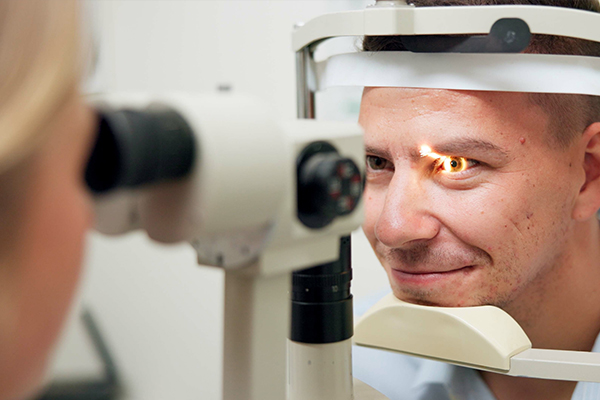
During your appointment, we’ll examine your eyes and explain which treatment options may suit your condition and lifestyle. You’ll receive expert advice and a clear, personalised plan.

STEP 3: ENJOY FREEDOM

After treatment, many people feel relief knowing their eyes are healthier and their sight is clearer. With proper care, you can look forward to years of confident, comfortable vision.


Take the first step toward clearer, healthier vision

Book an appointment to learn more about your eyes and the treatment options that may suit you

Take the first step toward clearer, healthier vision

Book an appointment to learn more about your eyes and the treatment options that may suit you

Hi, I’m Dr Daya Sharma

I’m a cataract, corneal and refractive surgeon with subspecialty training from Moorfields Eye Hospital in London and Sydney Eye Hospital. I perform laser vision correction procedures, refractive lens surgery, and advanced cataract surgery using the latest diagnostic and surgical technology. My work is focused on helping people reduce their dependence on glasses and improve their quality of vision at all distances. I’m actively involved in research, publication and surgical education, and I take pride in offering honest, thorough guidance to every patient. My approach is personal, careful and always tailored to individual needs and lifestyles.

Hi, I’m Dr Shanel Sharma

I’m an ophthalmologist with subspecialty training in paediatric eye conditions, strabismus, medical retina and general ophthalmology from leading hospitals in Sydney and London, including Moorfields Eye Hospital. I hold a Fellowship with RANZCO and have published widely in peer-reviewed journals. My focus is providing careful, individualised care using evidence-based treatments. I’m accredited to treat a range of conditions and perform procedures including intravitreal injections, strabismus surgery and botulinum toxin treatments. I always aim to make the process clear, calm and supportive.