

Advanced care for age-related macular degeneration in Sydney

Expert retinal monitoring and treatment available to help preserve your central vision

Advanced care for age-related macular degeneration in Sydney

Expert retinal monitoring and treatment available to help preserve your central vision

With AMD treatment, you can protect the vital part of your vision

Discover how modern options may help slow progression and safeguard your sight
  • Age-related macular degeneration (AMD) affects the macula- the central part of the retina responsible for reading, recognising faces and seeing fine detail.
  • It is the leading cause of vision loss in Australians over 65. AMD does not cause total blindness because peripheral vision usually remains, but central vision loss can impact daily life.
  • Early AMD may have no noticeable symptoms, which is why regular eye checks are important.
  • As the condition progresses, people may experience blurred or wavy central vision, faded colours or difficulty reading in low light.
  • Early diagnosis helps guide timely monitoring or treatment.
  • There are two forms of AMD, dry and wet.
  • Dry AMD is the most common form and progresses slowly as the macula thins and drusen build under the retina.
    • Lifestyle support, nutritional supplements (AREDS2), and regular monitoring aim to slow progression.
  • Wet AMD is less common but more aggressive. It occurs when abnormal blood vessels grow beneath the retina and leak fluid or blood.
    • Treatment focuses on reducing this leakage and preventing further damage. Anti-VEGF eye injections are the current standard of care and may help stabilise or improve vision when started early.
  • Treatment for AMD depends on the type.
  • For dry AMD, the aim is to slow progression, protect the macula and support quality of life. Lifestyle changes and AREDS2 vitamin supplements may help in eligible patients.
  • Wet AMD is treated with anti-VEGF injections delivered directly into the eye. These medications block the signals that encourage abnormal blood vessel growth and leakage.
  • In some cases, specialised laser therapy may be used.
  • Because AMD can change over time, regular eye scans and follow-up appointments are important to track response and guide ongoing care.
  • All treatments involve potential risks.
  • Anti-VEGF injections are considered very safe but can cause transient irritation, floaters or light sensitivity.
  • Rarely, they may lead to infection or bleeding inside the eye.
  • Supplements should only be taken when recommended, as high doses may not be suitable for everyone.
  • Laser therapies are less commonly used today but may still have risks to surrounding tissue.
  • AMD itself can progress even with treatment, especially when detected late.
  • Your ophthalmologist will clearly explain risks and how they are minimised to support informed decision making.
  • With prompt care, many people with wet AMD maintain useful vision for reading, watching TV and staying active. Some people may even notice improvement in clarity.
  • Dry AMD management can help preserve vision for as long as possible, but some central vision loss may still occur.
  • Results vary depending on how early the disease is found, the type of AMD and how consistent ongoing management is.
  • The goal is to preserve independence and maximise the vision you rely on every day.
  • Regular monitoring ensures your care is adapted over time to support the best outcome for your sight.

GAIN VISUAL FREEDOM IN 3 EASY STEPS

Eye treatment options can be confusing, we’ve made the path to healthier vision easy to follow

STEP 1: GET IN TOUCH

Every eye is different. The first step is to find out which treatment could help you see more clearly and protect your long-term vision. Call our caring team or use our online calendar to book an appointment.
STEP 2: WE’LL MEET

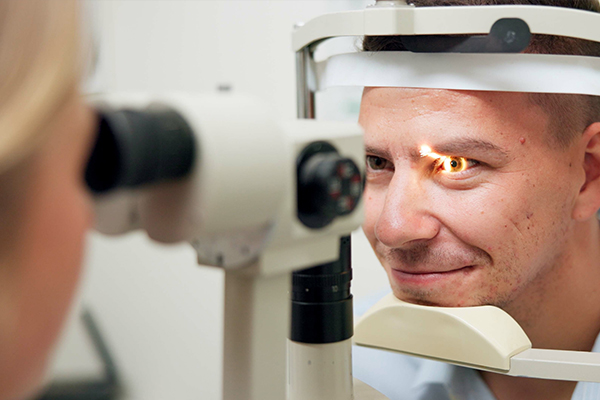
During your appointment, we’ll examine your eyes and explain which treatment options may suit your condition and lifestyle. You’ll receive expert advice and a clear, personalised plan.

STEP 3: ENJOY FREEDOM

After treatment, many people feel relief knowing their eyes are healthier and their sight is clearer. With proper care, you can look forward to years of confident, comfortable vision.


Take the first step toward clearer, healthier vision

Book an appointment to learn more about your eyes and the treatment options that may suit you

Take the first step toward clearer, healthier vision

Book an appointment to learn more about your eyes and the treatment options that may suit you

Hi, I’m Dr Daya Sharma

I’m a cataract, corneal and refractive surgeon with subspecialty training from Moorfields Eye Hospital in London and Sydney Eye Hospital. I perform laser vision correction procedures, refractive lens surgery, and advanced cataract surgery using the latest diagnostic and surgical technology. My work is focused on helping people reduce their dependence on glasses and improve their quality of vision at all distances. I’m actively involved in research, publication and surgical education, and I take pride in offering honest, thorough guidance to every patient. My approach is personal, careful and always tailored to individual needs and lifestyles.

Hi, I’m Dr Shanel Sharma

I’m an ophthalmologist with subspecialty training in paediatric eye conditions, strabismus, medical retina and general ophthalmology from leading hospitals in Sydney and London, including Moorfields Eye Hospital. I hold a Fellowship with RANZCO and have published widely in peer-reviewed journals. My focus is providing careful, individualised care using evidence-based treatments. I’m accredited to treat a range of conditions and perform procedures including intravitreal injections, strabismus surgery and botulinum toxin treatments. I always aim to make the process clear, calm and supportive.