


Specialist care for keratoconus available in Sydney

Modern treatments such as corneal cross-linking may help strengthen the cornea and reduce further changes so you can protect your vision for the future

Specialist care for keratoconus available in Sydney

Modern treatments such as corneal cross-linking may help strengthen the cornea and reduce further changes so you can protect your vision for the future

With keratoconus treatment, you may help stabilise your cornea

Learn how these treatments work and what they may do to support clearer, more comfortable sight
  • Keratoconus is a condition where the cornea, the clear front surface of the eye, becomes thinner and gradually bulges into a cone-like shape.
  • This changes the way light enters the eye, causing blurred or distorted vision, increasing short-sightedness and irregular astigmatism.
  • It often begins in teenage years or early adulthood and may progress over time.
  • People may notice ghosting of images, glare, halos or difficulty seeing clearly with glasses.
  • Keratoconus can be linked with frequent eye rubbing and allergies.
  • Treatment is typically considered when glasses or soft contacts can no longer provide clear vision or if specialised lenses become uncomfortable.
  • Early diagnosis and monitoring are important, as modern treatments may help slow progression and support clearer, more comfortable vision.
  • Keratoconus treatment focuses on two goals: slowing or halting progression and improving visual clarity.
  • In early stages, glasses or specialised contact lenses such as rigid gas-permeable or scleral lenses can help provide clearer vision.
  • Corneal collagen cross-linking (CXL) is the main treatment to strengthen the cornea and reduce further changes over time.
  • If glasses or lenses are no longer effective, surgical options may be considered.
  • These include intracorneal ring segments to improve corneal shape, topography-guided laser treatment in selected cases, or implantable lenses for high prescriptions.
  • In advanced keratoconus, a corneal transplant may be recommended to restore a smoother optical surface.
  • A key advantage of early keratoconus treatment is the potential to reduce further corneal changes, helping protect long-term eye health.
  • Many patients also experience visual improvement when the corneal shape becomes more regular.
  • However, results vary and long-term monitoring remains important.
  • Some treatments involve recovery time or require ongoing lens wear for best clarity.
  • Not all procedures suit every stage of keratoconus, and your ophthalmologist will fully discuss expectations so you feel confident in the plan.
  • Each option has benefits and limitations based on how advanced the condition is and what best supports your quality of life.
  • Keratoconus treatments are widely used, but all medical interventions have potential risks. With corneal cross-linking, temporary dryness, light sensitivity, or discomfort may occur during healing.
  • Ring segment implantation may cause glare or require later adjustment.
  • Laser treatments can make the cornea thinner and are only appropriate in specific cases.
  • In very advanced disease, corneal transplantation may be considered, which involves longer healing and higher risk.
  • Your surgeon will assess your eyes carefully and discuss how any risks are minimised, helping you make an informed decision about whether treatment is right for you.
  • After treatment such as corneal cross-linking, many people experience stabilisation of their keratoconus over time, helping to maintain usable vision.
  • Specialised lenses often continue to provide the clearest view for daily activities. Some individuals may notice improved clarity if the cornea becomes more regular, though this varies.
  • Long-term care includes regular monitoring and protective strategies such as avoiding eye rubbing.
  • When treatments are chosen and timed well, they may help preserve independence and support confident vision throughout life.
  • Your surgeon will explain realistic expectations for your specific eyes and progression profile.

GAIN VISUAL FREEDOM IN 3 EASY STEPS

Eye treatment options can be confusing, we’ve made the path to healthier vision easy to follow

STEP 1: GET IN TOUCH

Every eye is different. The first step is to find out which treatment could help you see more clearly and protect your long-term vision. Call our caring team or use our online calendar to book an appointment.
STEP 2: WE’LL MEET

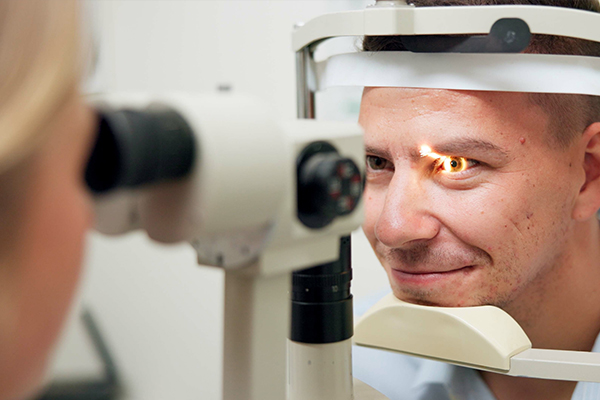
During your appointment, we’ll examine your eyes and explain which treatment options may suit your condition and lifestyle. You’ll receive expert advice and a clear, personalised plan.

STEP 3: ENJOY FREEDOM

After treatment, many people feel relief knowing their eyes are healthier and their sight is clearer. With proper care, you can look forward to years of confident, comfortable vision.


Take the first step toward clearer, healthier vision

Book an appointment to learn more about your eyes and the treatment options that may suit you

Take the first step toward clearer, healthier vision

Book an appointment to learn more about your eyes and the treatment options that may suit you

Hi, I’m Dr Daya Sharma

I’m a cataract, corneal and refractive surgeon with subspecialty training from Moorfields Eye Hospital in London and Sydney Eye Hospital. I perform laser vision correction procedures, refractive lens surgery, and advanced cataract surgery using the latest diagnostic and surgical technology. My work is focused on helping people reduce their dependence on glasses and improve their quality of vision at all distances. I’m actively involved in research, publication and surgical education, and I take pride in offering honest, thorough guidance to every patient. My approach is personal, careful and always tailored to individual needs and lifestyles.

Hi, I’m Dr Shanel Sharma

I’m an ophthalmologist with subspecialty training in paediatric eye conditions, strabismus, medical retina and general ophthalmology from leading hospitals in Sydney and London, including Moorfields Eye Hospital. I hold a Fellowship with RANZCO and have published widely in peer-reviewed journals. My focus is providing careful, individualised care using evidence-based treatments. I’m accredited to treat a range of conditions and perform procedures including intravitreal injections, strabismus surgery and botulinum toxin treatments. I always aim to make the process clear, calm and supportive.